Showing posts with label Old Homes. Show all posts

Monday, September 14, 2015

Boca Raton

Boca Raton has always meant, to me, affluence and Mafia so, being in the area, we took a drive a few miles north and visited the city.  It's like a night and day difference between it and Ft. Lauderdale!  The entire city is meticulously landscaped, the basins filled with larger and larger yachts.  Even the grocery stores have elaborate facades and entryways.  Wide streets, gated communities, huge hotels and multi-million dollar homes are found throughout. 

Boca Raton skyline
The body of water you're seeing here is the intracoastal waterway.

Entrance to a Publix grocery store

We spent some time driving through a small area called Old Floresta.  This is the historic district of the city and was originally built in the mid 1920s with narrow streets and lush landscaping.  Although some of the homes have been scraped and replaced, we saw many that seemed to be of the era.  We could tell that these folks must have full time gardeners just to keep the paths to the homes open!

Narrow streets

The hedges provided peeks of the homes behind them.


Some of the homes in the neighborhood

Not sure what this is but I found it interesting.

It was funny, when we got on Hwy A1A to take the beach road back to Ft. Lauderdale, it was extremely apparent when Boca ended and the next city started.  The perfectly smooth, blacktopped road instantly turned to patched concrete.  I'm telling you, it was like day and night!

Boca Raton turned out to look exactly as I had pictured and I'm glad I got the chance to see it.  Wouldn't want to live there, even if I was worth millions or billions, but it was certainly interesting to see!

Until next time...


Tuesday, July 14, 2015

A Patriotic 4th of July

After leaving West Point, we did another 3 three states in one day - New York, Connecticut and Massachusetts.  I truly forget how close things are back east, but it's nice when you're sightseeing - you can park in one spot and see a lot!

The 4th of July found us in the Boston area for just a couple of days.  Not quite ready to navigate large city crowds, we instead chose to follow the path of Paul Revere on his midnight ride and the "shot heard round the world" that began the American Revolution.

Minute Man National Historic Park spans the area between Lexington and Concord and commemorates the opening battles of the war for independence from Britain.  We started at the Minute Man visitor center, where we were greeted by a British office and shown a very well done multi media presentation about the activities along the battle road.

Redcoat

We had to backtrack just a bit to begin in Lexington, but it was there, in the Buckman Tavern on the Lexington Green, that militiamen gathered to await the British.

Buckman Tavern as it would have appeared on April 19, 1775


The restored Buckman Tavern

The interior of the tavern is staged in such a way that I felt like I just missed the people gathered there.

Interior rooms

Then it was off to follow the battle road from Lexington to Concord.  Along the way, we discovered a fact that, if I had learned it, I'd forgotten.  Did you know that Paul Revere, although he began his ride in Boston harbor, never completed the ride to Concord?  Just outside of Lexington, joined by William Dawes and Samuel Prescott, they were captured by British patrol.  Dawes and Prescott escaped to go on to warn Concord, but Revere was held for some time, then released to return to Lexington.

Paul Revere capture site

This battlefield was not documented as well as the Civil War ones we've seen, but the National Park service has done a good job of preserving and restoring points along the way.  The next stop was the Hartwell Tavern.  This building dates from 1772 - 1773 and has been wonderfully restored.  When you walk into it, you can seen original floors, low ceilings and talk with a militia man in character.

Hartwell Tavern

Restored battle road

The battlefield at North Bridge

Military actors, in character

Monument to the Militiamen
I found it interesting that the statue is that of a farmer.  Our militia was made up of ordinary farmers with little to no military training, which makes it extraordinary that they were able to defeat a highly trained military regiment.

The North Bridge
A reconstruction but historically accurate

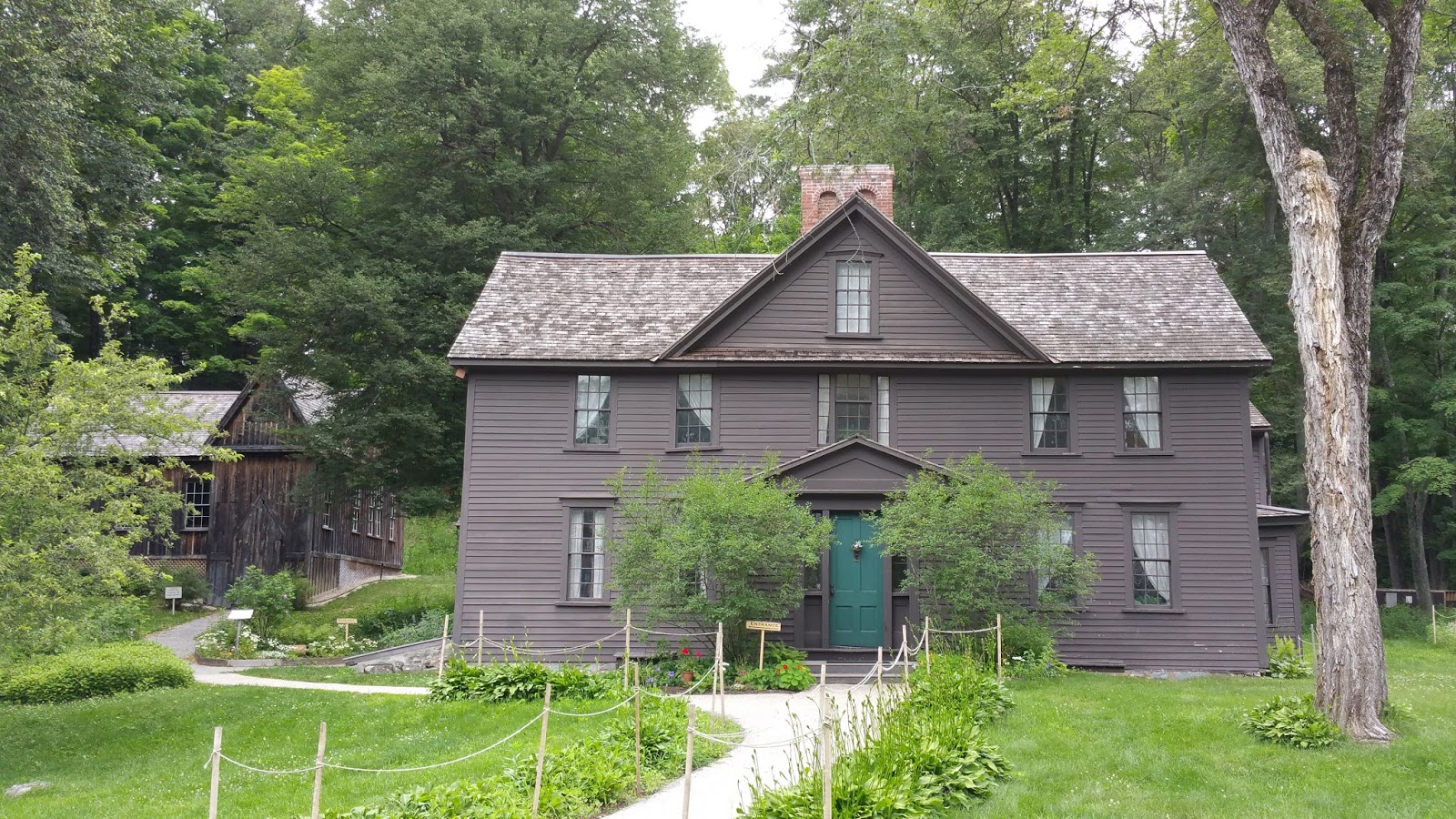
We continued on to view the Concord village green and along the way passed by the home of Louisa May Alcott.  It is in this house that she penned "Little Women."

Orchard House

Walking the battle road, particularly on the 4th of July, made me think about all the struggles our country has gone through to be the best country in the world it is today.  As I watch the news, particularly of late, I'm saddened that some of the freedoms for which our forefathers fought are being gradually eroded away and many of the historic icons of our past are being deemed unacceptable. Yes, we as a country have done some things that perhaps we shouldn't have, but eliminating any reminder of regrettable actions does not erase them from our history.  Someone said a long time ago "those who cannot remember the past are condemned to repeat it" and I think it would be wise for a lot of people to think about that!

Until next time...
Sunday, July 12, 2015

A Tourist in my Home Town

We're baaaaack!  Limited internet prevented me from posting, but I've got it now, so I'm going to try to catch up.  Hope you're still following!

We spent a week in upstate New York, visiting friends and family.  Mostly non-blogworthy activity, but while there, I got opportunity to tour a home that I had driven by a million times in my youth, before it became a museum, the Wickwire mansion, or, as it is called now, the 1890 House.

Wickwire home

The Wickwires were a prominent family in Cortland, N.Y. in the late 1800's, where they owned a factory that produced wire screen.  I thought the interior was as beautiful as the Biltmore mansion that we toured in North Carolina (you can read about that here), just on a much smaller scale.

Built-in nook in the entry

Detailed inlays on the floor 
Each room on the main level had a different pattern.

The ceiling of the solarium

Wood work detail

Stained glass 
Difficult to see in the picture, but it looked like glass balls embedded in the design.  It was the most beautiful glasswork I've ever seen and it was in every window on the main level.
The carriage house in back

It was an experience to look at the upstate region in which I grew up with eyes of someone who has traveled and lived around the world.  I haven't been back to the area in many years and while some things had changed drastically, others were as familiar as the back of my hand.  And while I do believe you CAN go home again, I don't think it's for me.  Still, it was nice to see family and friends, but after a week, I was itching to get on with it.  So off it was for us, to another adventure down the road!

Until next time...


Thursday, June 18, 2015

Smoky Mountain National Park

Smoky Mountain National Park has always been on Sid's bucket list.  We spent a total of three days in the park and came nowhere near seeing it all.  I've been putting of writing this post because I know there's no way I can show or describe just how beautiful the park is.

As those of you that live in Colorado know, the Rocky Mountains are diverse in appearance from one end to the other.  The Smokies that we saw lacked that diversity, but were nonetheless stunning.  The variety of vegetation and the numerous streams that provide the moisture for all the lushness set the scene for delightful drives and, if you're up to it, wonderful hikes on the many trails through the park.  The woods are full of such a mixture of hard wood trees, evergreens, flowering trees and bushes and vines growing everywhere.


These were just some of the views we saw on our drives.  Some of the drives in the park are barely cut through the vegetation and you can't really take pictures.  It's easy to see where, given just a short lack of attention, the trees and vines would overtake the road very quickly.

We didn't see much wildlife, but did manage to get a glimpse of this guy...

Yes, I saw a bear!!!

The traffic in some places reminded me of RMNP during elk bugling season...

There wasn't even a bear at the front of this line!

And this sign, reminding me of our friend Bob P., was certainly unusual...

A new caution sign for my collection

The National Park Service has done a great job of preserving history in the park.  Multiple original homesteads have been restored and kept as historical proof that pioneers settled and lived in these mountains long before it became a park.


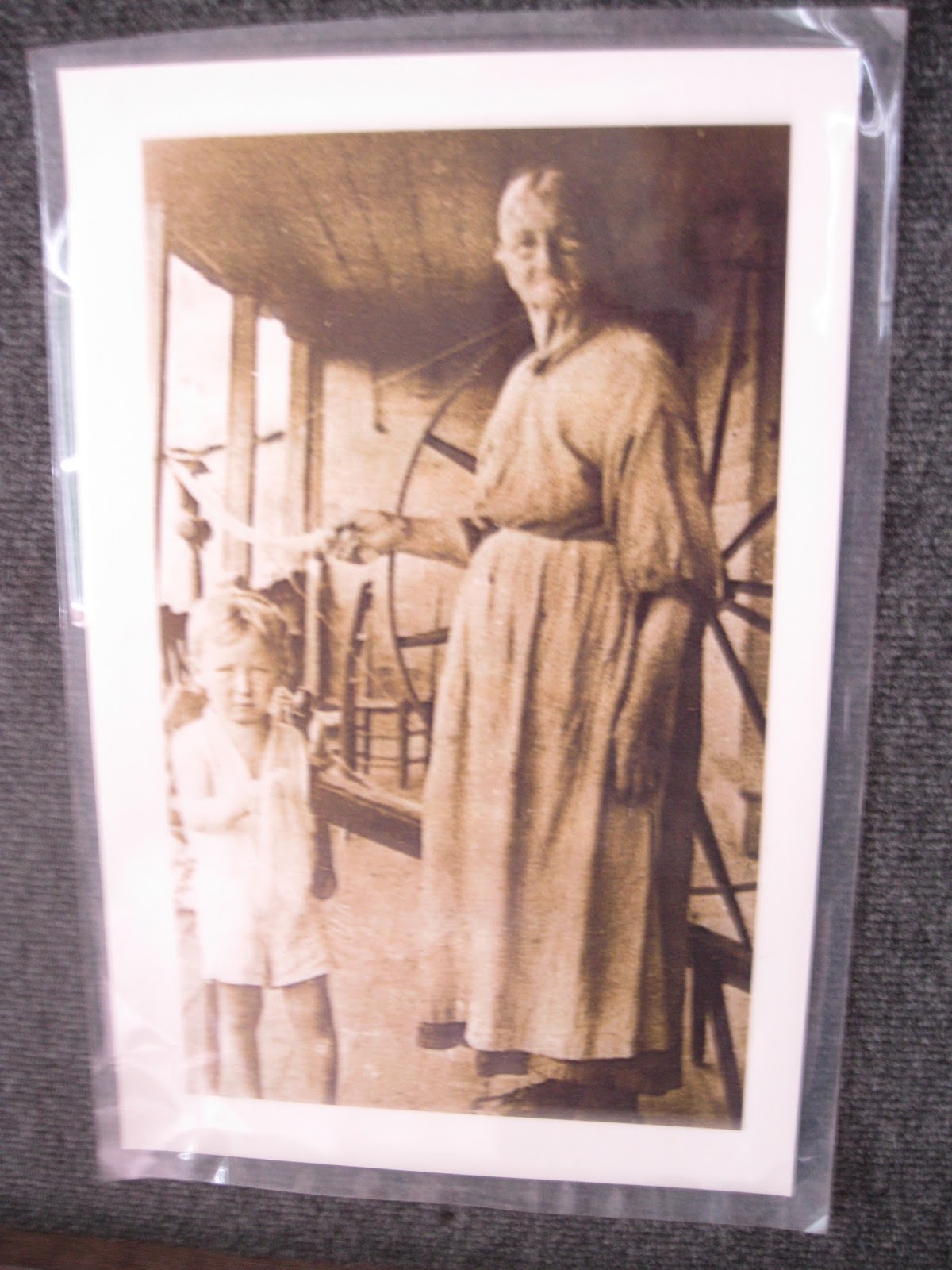
Cades Cove is one of the mountain valleys in the area.  The area was originally settled between 1818 and 1821 and today contains faithfully restored buildings that represent a working farm of the period.  One, a farmhouse that was owned and occupied by Rebecca Cable until her death .in 1940.

"Aunt" Becky Cable

The farmhouse was originally a store, then a residence and boarding house.  It never had indoor plumbing.

There is a working gristmill on the property and you can purchase cornmeal or flour in the gift shop.

The mill

Water wheel for grinding corn

Finally, I thought this interesting...

While the elevation is nothing like you find in the Rockies, the terrain is just as brutal and beautiful.

If you love the outdoors, consider making a trip to the Great Smoky Mountains.  It's a reminder of just how beautiful our country is from coast to coast.

Until next time...


Wednesday, June 10, 2015

In and Around Murfreesboro

Murfreesboro, TN was the site of some pretty significant battles during the Civil War and is a city that Sid has always wanted to visit.  Officially, it's a suburb of Nashville, but it's far enough away from the city to be a distinct destination for us.  We had the opportunity over several days to learn about some of the history.

Canonsburgh was the original name of the settlement in 1811 and to honor that history, the city has recreated a pioneer settlement that represents what the burg might have looked like back them.  It's totally free to tour and we managed to get to do so in between rain showers one day.


Starting with upper left a town hall, general store, doctor's office and the outhouse.  Did you know that the term "outhouse" can be used for any structure used for activities not wanted in the main house?

Again starting with the upper left, a grist mill, the interior of the schoolhouse, a cotton warehouse and the chapel.

It's amazing to me that this authentically recreated village is completely funded by donations. What a great resource this is for area school children.  Of course, they use some of the buildings as event centers for weddings and such, so touches of the modern age can be seen.

If I ignored this view, I felt like I was really walking around a village in the 1800s.

By 1818, the city had been renamed Murfreesboro and the state capitol moved to it from Knoxville.  The current day town square has a pretty impressive courthouse and a pretty busy shopping district.

Murfreesboro Courthouse

We also got to tour a historic home in Murfreesboro called Oaklands.  Owned by the Maney family who were Union sympathizers, it survived the Civil War and decades of neglect to finally be owned and restored by the city.

Oaklands

The front door did not have a key hole or lock.  This was because the front door was only used by visitors and thus opened from the inside only!

Looking up the drive.  Most homes of this era had keyhole shaped drives leading to the front of the house.  This was to reduce the amount of dust kicked up by the horses - because it wasn't a straight driveway, the horses naturally had to slow down.

Pictures were not allowed inside the home, but we had a personal tour with a young man who was well informed about the home as well as local history.  We discovered that if you get to an attraction when they first open for the day, you generally get a one-on-one tour.  Our guide told us that descendants of the Maney family still reside in Murfreesboro but, interestingly enough, they are almost all black.  That's because the slaves, after emancipation, generally took the family name as their own.  Makes me wonder how those descendants feel having their history told over and over!

Something I did not know was that, after the war, Southerners who were loyal to the Union were allowed to file a claim with Southern Claims Commission to be compensated for loss of personal property.  Evenually, Dr. Maney's claim was denied since his son served for the Confederacy.

And last, but not least, we visited the Stones River National Battlefield.  This campaign was one of the bloodiest of the Civil War.  More than 23,000 troops were killed, causing the battlefield to be nicknamed Hell's Half Acre.  In addition to a national cemetery, it also contains the first Confederate cemetery that we've seen.  If you remember in my Vicksburg post, national cemeteries were only for Union casualties. 


Sid in the graveyard

The museum on the grounds had some original artifacts, dioramas and a very extensive narratives describing the battle.
Original fife owned and used by Pvt. Slyvester Winchester.  He was killed on the first day of the battle.

Diagram of the earthenworks fort used on the site

Diorama of a battle scene

A reproduction over the shoulder bugle.  Music played a very important part in the war.  I've never seen one like this.

Tennessee was a split state during the Civil War.  While officially a slave state, much of the population were Union sympathizers when war broke out.  I happened to see a map that showed the locations of all the war activity and I was shocked at how invasive the war was on the state.


There appear to be very few areas of that state that did not see battle.  Tennessee is certainly a state with a rich history and worth visiting.  I hope I can return some day!

Until next time...